

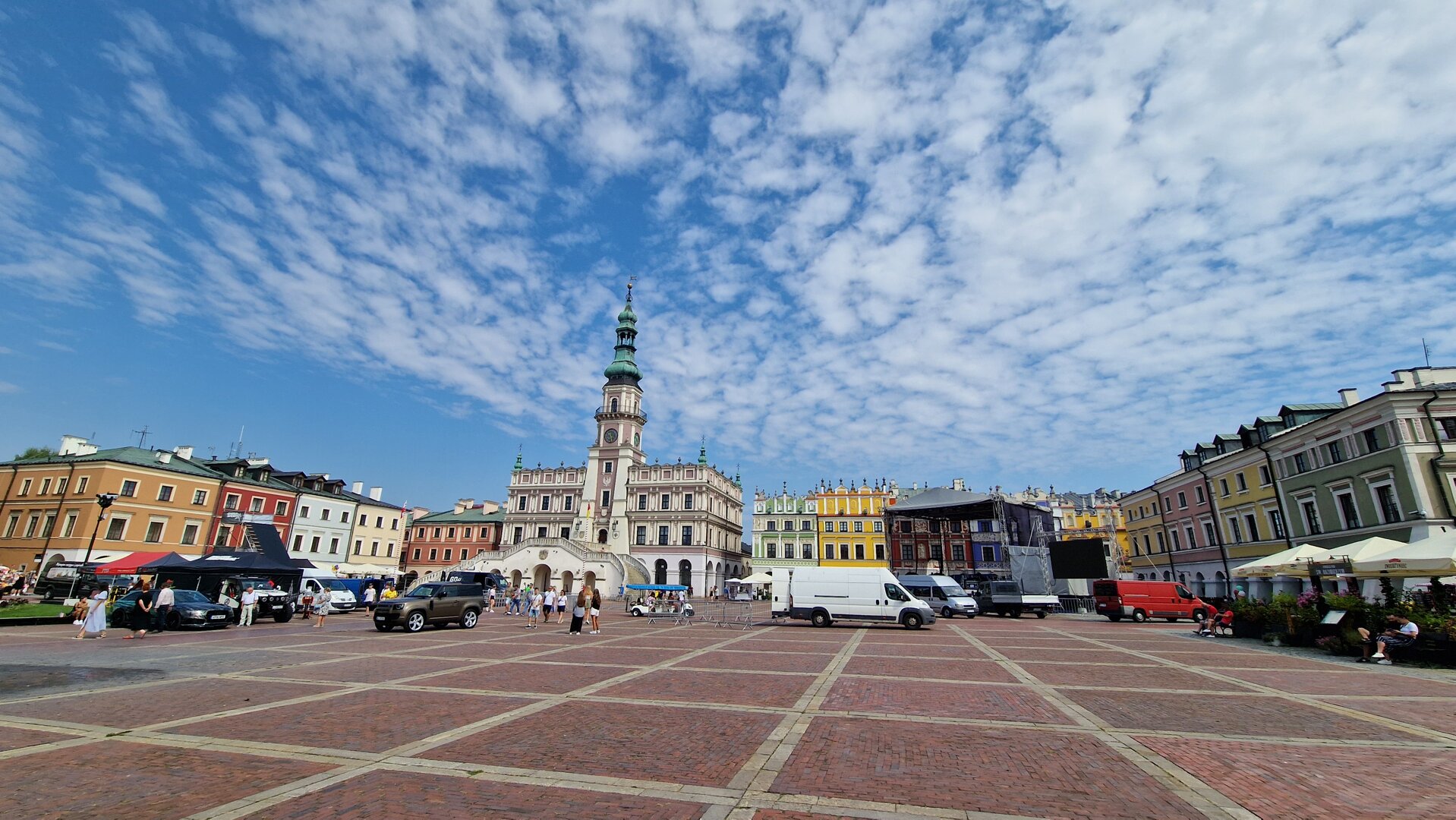
About Zamość and the Lwowska Gate (Brama Lwowska)
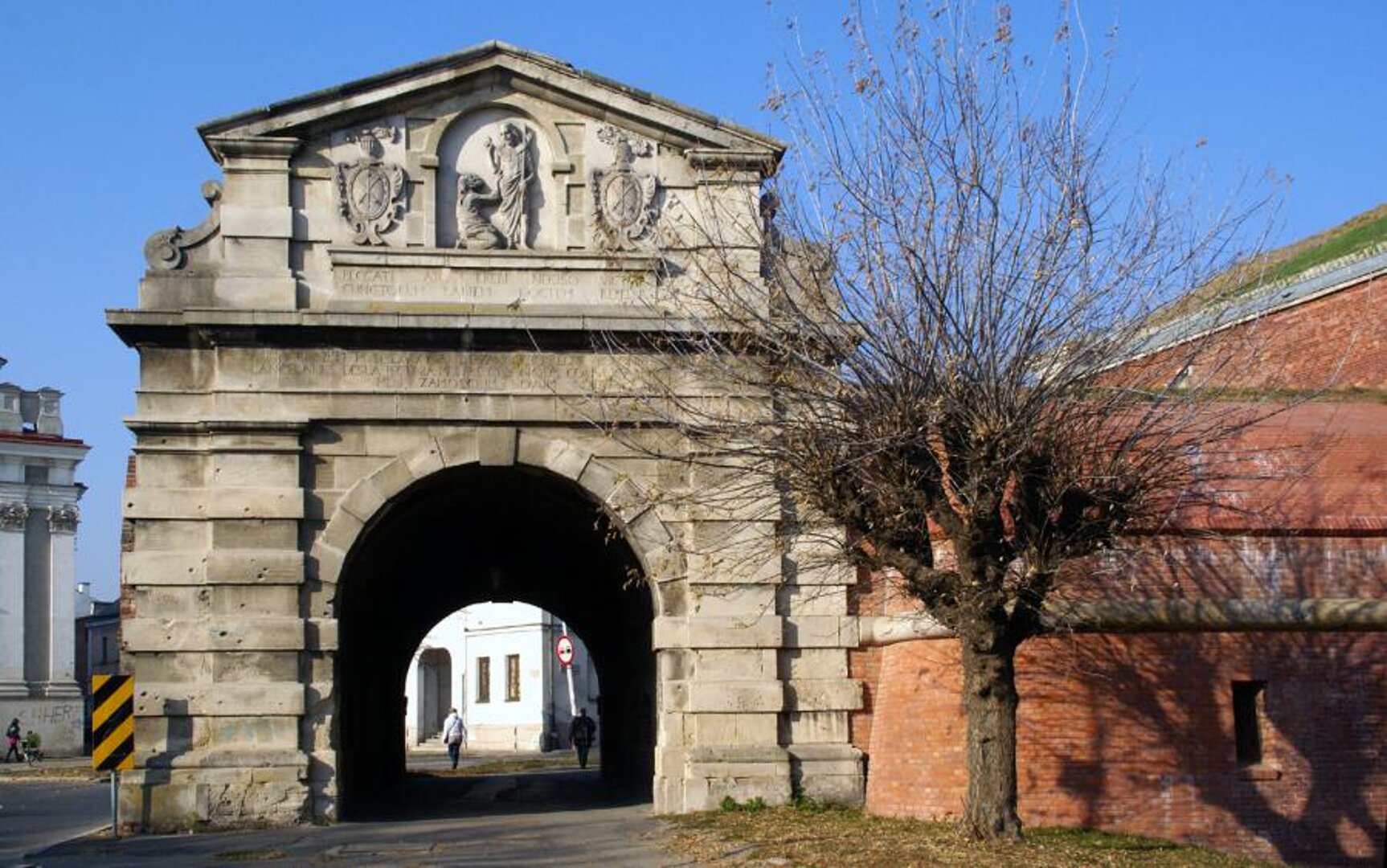
The Old Lwowska Gate (Stara Brama Lwowska) was one of the three original city gates, built around 1599 to a design by Bernardo Morando. Initially constructed as a tower structure without internal embrasures, it was set within earth ramparts. The gate received a Mannerist stone façade in the form of a triumphal arch, featuring Tuscan architectural decoration inspired by the designs of Serlio. The façade was crowned with a bas-relief depicting Christ the Saviour and St Thomas, the patron saint of Zamość. A bridge over the moat once accompanied the gate. Its form and style closely resembled those of the Old Lublin Gate, with stylistic origins tracing back to Italian architecture of the mid-16th century. A full reconstruction, including the restoration of the façade’s decoration, was carried out between 1978 and 1979.
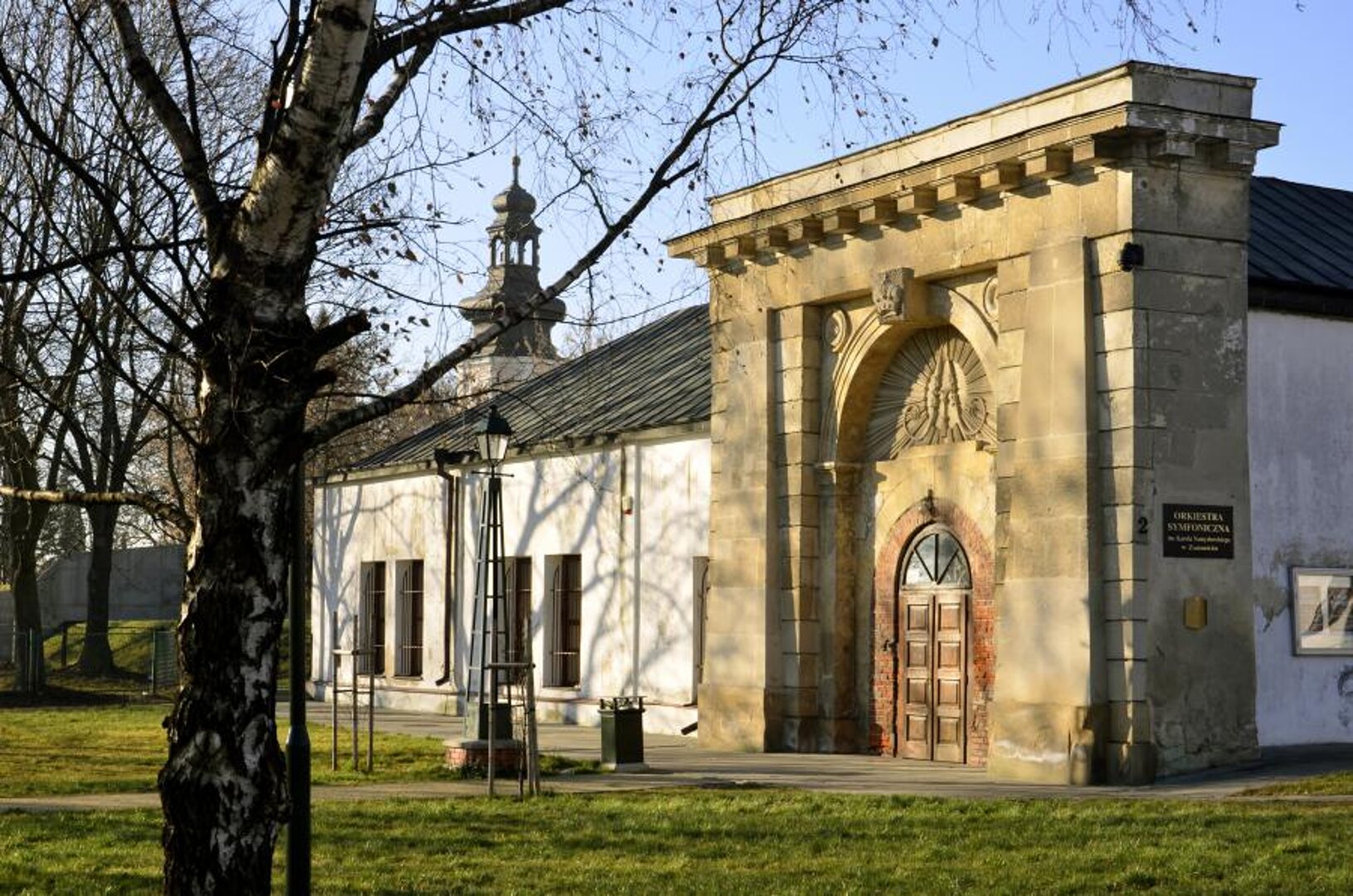
The New Lwowska Gate (Nowa Brama Lwowska) was built as part of the city’s enclosed fortifications during the general modernisation carried out in the period of the Congress Kingdom of Poland. It took over the role of the Old Gate after new access routes to the city had been laid out. This change was prompted by the construction of outer defensive structures designed to strengthen the city’s protection. The gate was designed by Lieutenant Colonel Engineer Jan Paweł Lelewel between 1796 and 1847. After 1825, massive six-bay casemate barracks were added to the structure. Following the decommissioning of the fortress in 1866, the original passageway was bricked up and the building was converted into a prison. During the Second World War, it housed a civilian casino. Since 1980, the gate has been home to the Karol Namysłowski Symphony Orchestra.